
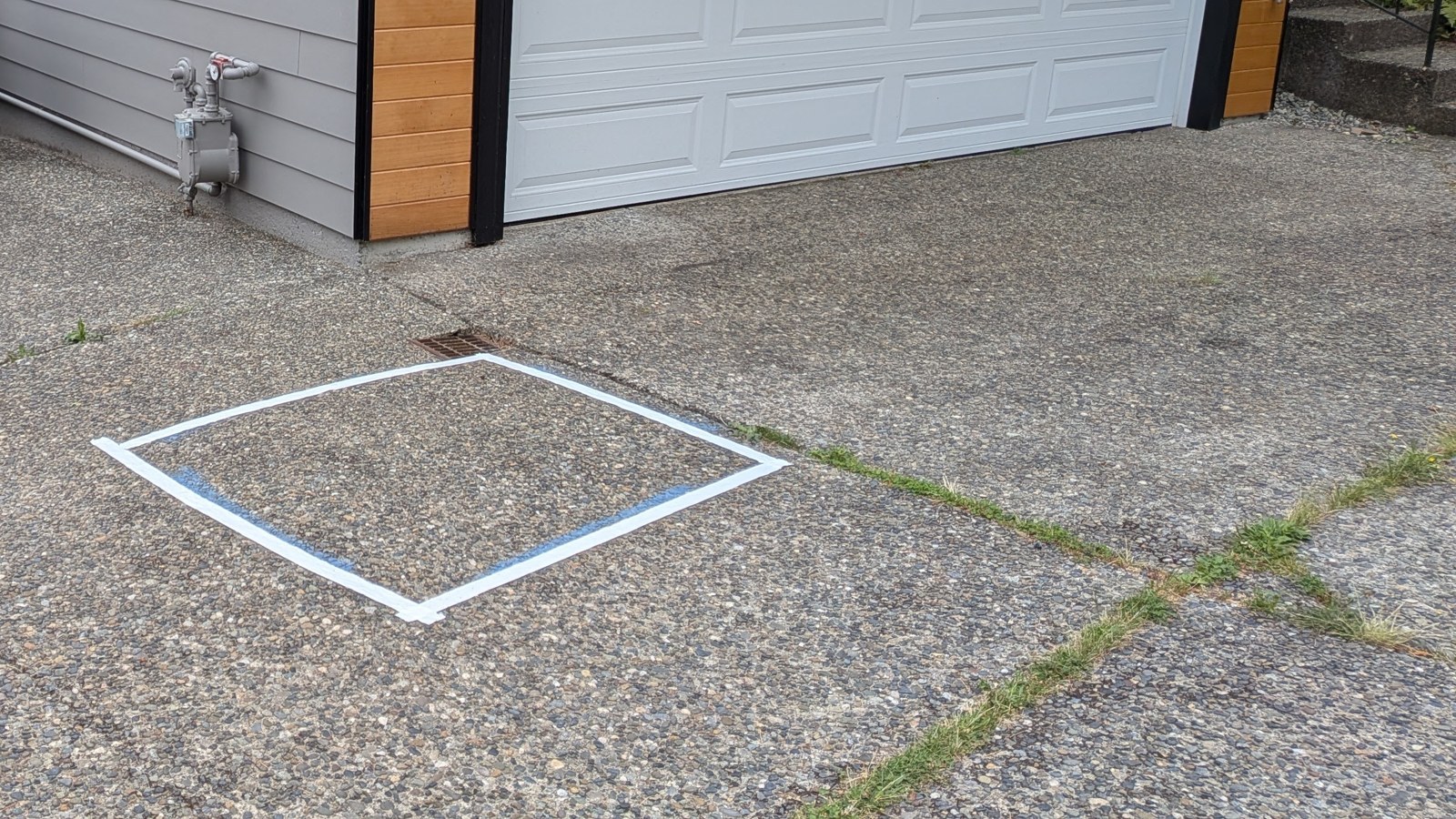
Most people who call us about a trenchless water line already know the basic idea: a new line bored under the yard instead of a trench through it. What they want to know is what the day looks like, what gets dug, and what they are left with. These are the answers we give, drawn from the lines we replaced this year in Bellevue, Kenmore, Mill Creek, Edmonds and beyond.
Is trenchless cheaper than digging?
For a full replacement on an established lot, usually yes, once you count what goes back on top. The pipe and labor cost about the same either way; what trenchless avoids is the new concrete, sod and plantings a trench forces you to buy. Near Phantom Lake, the only concrete cut was one small square by the garage.
For a short line under bare lawn, a trench can cost less, and we say so. Full replacements by either method fall between $6,000 and $16,000 in our area; our trenchless or open trench guide walks through when each wins.
What will you actually dig on my property?
Small pits, not a trench. We dig at the meter, where the line enters the house, and at each spot where another buried utility crosses the drill's path. In Newport Shores in August, that meant a pit at the meter and a few small openings in the beds, all backfilled when the work was done.
Why do you need 811 before you start?
Because the drill goes under gas, power, cable and sewer lines we cannot see. Calling 811 gets every utility marked on the ground first, and we dig a small pit wherever a marked line crosses our path so the bore passes it safely. Skipping the locate is how a quick water line job becomes a gas leak.
Why does my new line go inside a conduit?
The conduit is a tougher outer pipe, usually two-inch HDPE, that the PEX A water line runs through. It shields the line from rocks, roots and shifting soil, and some cities call for it. On our recent Bellevue jobs the city's code required it, so we include it there. Elsewhere it is an option we recommend.
What is the wire you bury with the pipe?
It is a tracer wire, laid alongside the new line from the meter to the house. Plastic pipe cannot be found with a metal detector, so the wire is what lets a locator trace your water line from the surface years from now, whether you are planting a tree, adding a fence or calling 811 yourself.
Will my sprinklers still work after the new line goes in?
They should, as long as the irrigation is tied in to the new service. On the Newport Shores job in August, the crew reconnected the existing irrigation to the new line before backfilling, so the sprinklers ran off the new service. Tell us where your irrigation connects and we include it in the plan.
How long will my house be without water?
Only for the switchover, not the whole job. The bore and the pull happen while your old line is still in service. The water goes off when we connect the new line at the meter and at the house, then comes back on for testing, and we tell you when that will be before we start.
What warranty comes with a trenchless water line?
On our recent replacements, the underground water pipe carries a 15-year warranty and the above-ground work carries two years. We also pull the permits and schedule the inspections. Keep the paperwork with your house records, because a buyer's inspector may ask when the line was replaced and by whom.
Our Recommendation
If your water line is leaking, old black poly or galvanized, and runs under a driveway, walk or established garden, start with trenchless and ask for the dig plan in writing: where every pit goes, whether the conduit is included, and whether irrigation is reconnected. A good quote answers all three before anyone starts the drill.
Get a Real Number for Your Line
Call for a free estimate, or request a callback. We locate the line first, then show you where we would dig.
More: trenchless water line replacement · main water line repair · water line repair in Bellevue · what water line replacement costs · why we install PEX A · a trenchless line on Mercer Island