
Tankless Water Heater Installation — Greater Seattle
Endless hot water, lower energy bills, and decades of reliable service
Why Homeowners Are Going Tankless
Tankless water heaters — also called on-demand or instantaneous water heaters — heat water only when you need it, eliminating the standby energy loss of a traditional tank. For households tired of running out of hot water or ready for a more efficient system, tankless is often the smartest upgrade.
Done Right Plumbing installs tankless water heaters throughout the greater Seattle area. We'll help you determine if tankless is right for your home, select the right unit for your household's hot water demand, and handle the full installation — including gas line upgrades, venting, and permits.
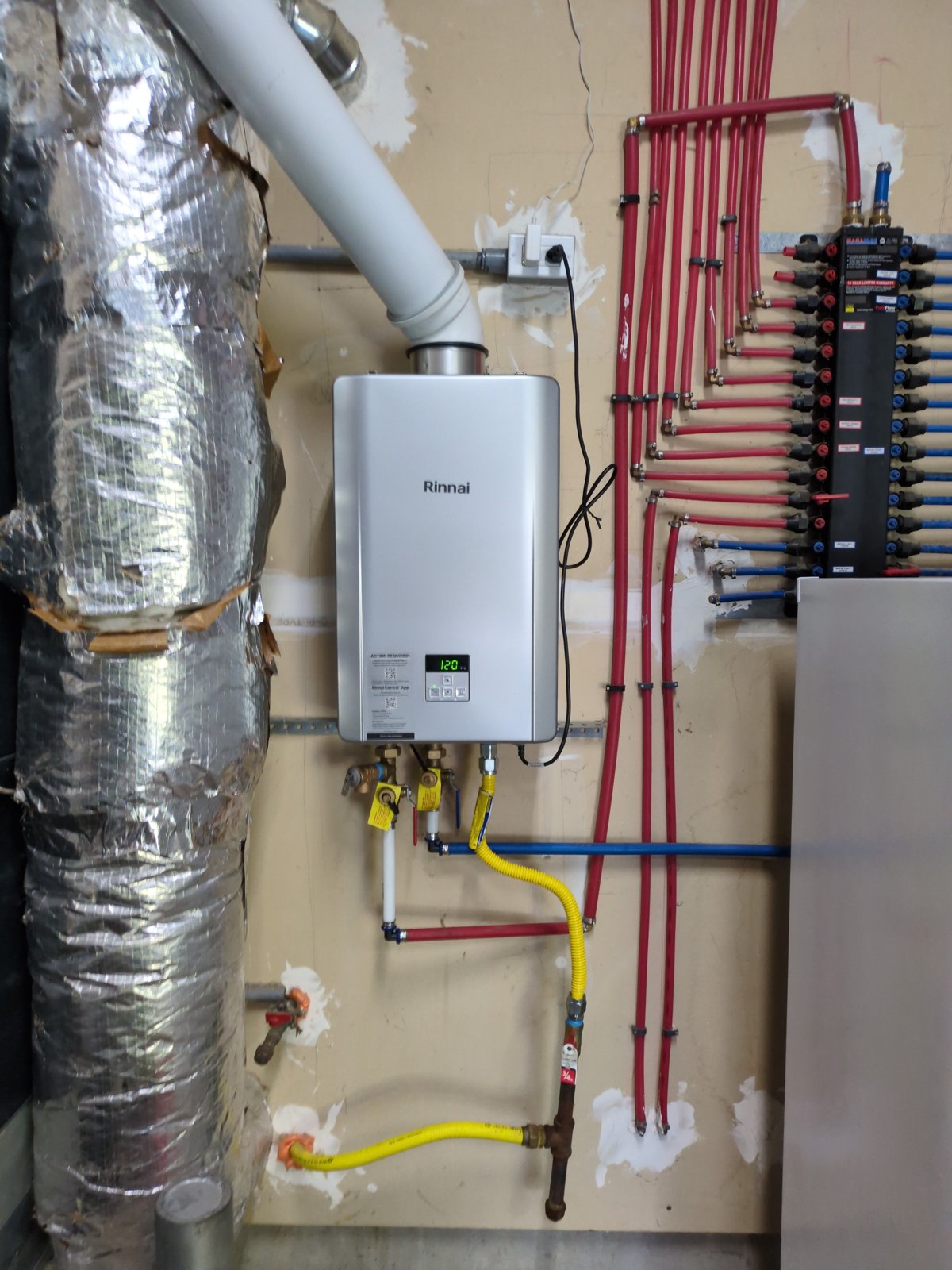
Benefits of Tankless Water Heaters
Endless Hot Water
The biggest advantage: you’ll never run out of hot water again. A tankless unit heats water on demand, so back-to-back showers, laundry, and dishwashing won’t leave anyone with a cold surprise. For larger households or homes with multiple bathrooms, this alone makes tankless worth considering.
Lower Energy Bills
Traditional tank water heaters keep 40–50 gallons of water hot 24/7, whether you’re using it or not. That standby heat loss accounts for a significant portion of your water heating costs. Tankless units only fire when hot water is called for, which can reduce water heating energy use by 24–34% for homes that use 41 gallons or less of hot water daily, according to the U.S. Department of Energy. Actual savings depend on your household’s hot water usage, local utility rates, and the efficiency of your current system.
Longer Lifespan
A well-maintained tankless water heater can last 20+ years — roughly twice as long as a traditional tank. Actual lifespan depends on water quality, usage patterns, and adherence to the manufacturer’s recommended maintenance schedule. The heat exchanger on most quality units carries a 10–15 year warranty, and with annual descaling, these systems keep performing for decades.
Space Savings
Tank water heaters take up significant floor space — typically a 2' x 2' footprint. A tankless unit mounts on the wall and is roughly the size of a small suitcase. For homes with tight utility closets, garages, or those looking to reclaim space, tankless frees up valuable square footage.
Reduced Risk of Water Damage
No tank means no 40–50 gallons of water waiting to flood your home if something fails. While tankless units can still leak, the potential for catastrophic water damage is significantly lower than with a tank that can rust through and release its entire contents.
Cleaner Hot Water
Tank water heaters accumulate sediment and scale at the bottom of the tank over time. Tankless units heat water as it flows through, so you’re not bathing in water that’s been sitting in a steel tank for hours.
Is Tankless Right for Your Home?
Tankless water heaters aren't the best fit for every situation. Here's how to know if it makes sense for you:
Tankless is a good fit when:
- ✓Your household uses a lot of hot water — multiple bathrooms, back-to-back showers, or simultaneous hot water demands
- ✓You’re tired of running out of hot water — especially during morning rush hour
- ✓You want long-term energy savings — and plan to stay in your home 5+ years to recoup the higher upfront cost
- ✓Space is limited — you need the floor space a tank currently occupies
- ✓You’re building new or remodeling — installing tankless during construction is more cost-effective than retrofitting
A tank may still make sense when:
- ✓Your hot water needs are modest — a small household with low simultaneous demand
- ✓Upfront cost is the priority — tank water heaters cost less to purchase and install
- ✓Your home lacks adequate gas supply — some older homes need a gas line upgrade to support a tankless unit
- ✓You have very hard water — tankless units require annual descaling, and extremely hard water can shorten their lifespan
We'll assess your home's hot water needs, gas supply, and venting situation before recommending tankless. If a tank makes more sense for your situation, we'll tell you.
What Tankless Installation Involves
Installing a tankless water heater is more involved than swapping out a tank. Here's what a typical installation includes:
Sizing the Unit
We calculate your peak hot water demand — how many fixtures might run simultaneously — to select a unit with the right flow rate and temperature rise for your household. An undersized unit won’t keep up; an oversized unit wastes money.
Gas Line Evaluation
Tankless water heaters require more gas than tank heaters — typically 150,000–200,000 BTUs compared to 40,000–50,000 BTUs for a tank. Many homes need a gas line upgrade to support the higher demand. We’ll assess your existing gas line and include any necessary upgrades in your quote.
Venting
Gas tankless units require proper venting to the outdoors. Most use direct vent (sealed combustion) or power vent systems. We’ll determine the best venting route for your home, whether through an exterior wall or the roof.
Water Connections
We install new water supply lines with isolation valves for easy maintenance and future servicing.
Condensate Drain (Condensing Units)
High-efficiency condensing tankless units produce acidic condensate that must be drained properly. We’ll route the condensate line to an appropriate drain.
Permits and Inspection
Tankless water heater installation requires permits in most jurisdictions — typically both plumbing and mechanical. We handle the permitting process and schedule the inspection.
We Install Navien Tankless Water Heaters
We install Navien tankless water heaters — a brand we trust for its reliability, efficiency, and long-term performance.
Navien units are high-efficiency condensing water heaters, meaning they extract more heat from the combustion process and waste less energy up the vent. Many models include built-in recirculation pumps, so you get hot water faster at the tap without waiting for cold water to clear the pipes.
Navien backs their heat exchangers with a 15-year residential warranty — one of the longest in the industry. (Full warranty terms require annual maintenance and proper installation; see Navien's warranty documentation for complete details.) That coverage, combined with excellent parts availability, means your investment is protected for the long haul. We'll help you select the right Navien model based on your household's hot water demand.
Tankless Water Heater Maintenance
Tankless units require annual maintenance to perform their best and maintain warranty coverage:
Annual Descaling
Mineral buildup (scale) inside the heat exchanger reduces efficiency and can eventually damage the unit. We flush the system with a descaling solution to remove buildup. In areas with hard water, this may be needed more frequently.
Filter Cleaning
Tankless units have inlet filters that catch debris. We clean these during annual service.
Inspection
We check for error codes, inspect venting, verify ignition, and ensure everything is operating properly.
We offer annual maintenance plans to keep your tankless system running efficiently and protect your warranty.
Why Choose Done Right Plumbing?
- ✓We do the full installation — gas line, venting, permits, and all
- ✓50+ years combined experience in the greater Seattle area
- ✓300+ five-star Google reviews from real homeowners
- ✓Upfront pricing — you’ll know the cost before we start
- ✓We explain the tradeoffs — we’ll tell you if tankless isn’t right for your situation
- ✓Annual maintenance available — keep your system running efficiently
- ✓WA Contractor License #DONERRP852N5 — fully licensed, bonded & insured
We Serve Lynnwood, Everett & Surrounding Areas
We install tankless water heaters throughout Lynnwood, Everett, Bellevue, Kirkland, and the greater Seattle area. Whether you're upgrading from a tank or installing new construction, we'll handle the complete job.
Related services: Water Heater Installation | Water Heater Repair | Gas Line Installation | Whole-Home Repipe
FAQs About Tankless Water Heater Installation
How much does tankless water heater installation cost in the Seattle area?
Tankless water heater installation costs depend on the unit selected, whether your gas line needs upgrading, and the venting requirements. We provide upfront pricing before any work begins. Call us at 425-245-7552 for a free estimate.
Is a tankless water heater worth the extra cost?
For many households, yes. While the upfront cost is higher, tankless units last 20+ years (vs. 10–12 for tanks), use 24–34% less energy, and provide endless hot water. If you plan to stay in your home for 5+ years and your household has moderate to high hot water demand, tankless often pays for itself over time. Call us for a free estimate and we’ll help you weigh the options.
How long does tankless water heater installation take?
Most tankless installations take 4–8 hours, depending on whether gas line and venting work is needed. If we’re replacing an existing tankless unit with similar specifications, it may take less time.
Do tankless water heaters work during power outages?
No — even gas tankless units require electricity to operate the ignition, controls, and exhaust fan. If power outages are common in your area, consider a battery backup or whole-home generator.
How often does a tankless water heater need maintenance?
We recommend annual descaling and inspection to maintain efficiency and warranty coverage. Homes with hard water may need more frequent descaling.
Can I install a tankless water heater myself?
We strongly advise against it. Tankless installation involves gas work, venting, and electrical connections that require professional expertise and permits. Improper installation can create safety hazards and void your warranty.
Will a tankless water heater work with my existing gas line?
Many homes need a gas line upgrade to support a tankless unit’s higher BTU demand. We’ll assess your existing gas supply and include any necessary upgrades in your quote.
Ready to Go Tankless?
Call us today to discuss whether tankless is right for your home. We'll assess your hot water needs, evaluate your gas and venting situation, and provide an upfront quote for the complete installation.