
Galvanized water lines fail because their zinc coating wears away and the steel underneath rusts from the inside. The rust narrows the pipe, which costs you pressure and brings discolored water, and it eats through the thinnest spots, usually the threads, until the line leaks. Once that starts, the whole run is near the end.
Galvanized steel was the standard water pipe for houses built before the 1960s, and plenty of homes around Seattle, Shoreline, Lynnwood and Everett still have it, either in the ground between the meter and the house or in the pipes under the floor. Here is what actually happens inside it, how it shows up in the houses we work on, and what we recommend.
How a Galvanized Pipe Wears Out
1. The zinc coating is used up
Galvanized pipe is ordinary steel dipped in zinc. The zinc corrodes first, on purpose, protecting the steel while it lasts. Water running through the pipe slowly consumes it, and once it is gone in a spot, the bare steel underneath starts to rust.
2. Rust builds up and the pipe closes itself off
Steel rust does not wash away cleanly. It forms lumpy deposits on the inside wall, and minerals in the water settle into them. Year by year the opening shrinks, so a three-quarter-inch line can end up carrying a fraction of what it was sized for. That is why so many galvanized houses lose pressure long before they ever leak.
3. The threads go first
Every galvanized joint is threaded, and cutting threads removes the zinc and thins the pipe wall exactly where the joint has to hold. The threads are where we see most galvanized leaks start, along with the spots where the pipe meets a fitting of another metal.
4. Mixed metals speed it up
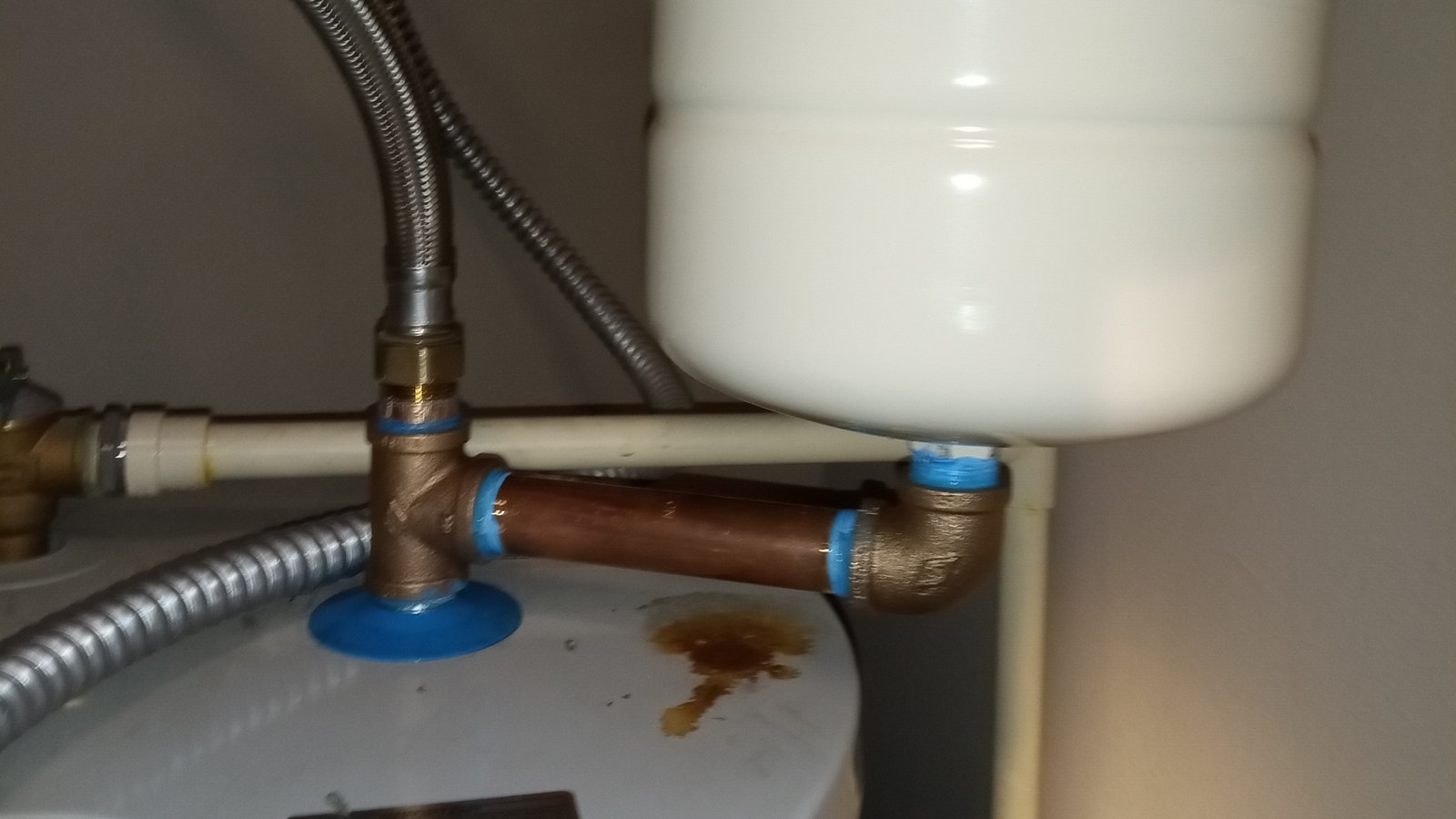
Where galvanized steel connects directly to copper or brass, the two metals react, and the steel side corrodes faster. Water heater connections are a classic spot. In October 2025, at a house in Seattle's Central District, Nick and Jeremy replaced leaking galvanized fittings on a water heater's cold inlet with new brass fittings and replaced the failed expansion tank at the same time.
What It Looks Like in Real Houses
The same story shows up across our service area, at every stage of it:
- Low pressure at one fixture. In August, at a Seattle house, Samuel and Joseph T. were called to replace a hose bib for low pressure and poor flow, and flagged that the galvanized piping feeding it could be the real cause.
- Weak joints that limit a repair. Replacing a failed shutoff valve at another Seattle house in March meant working back along the galvanized pipe to find a connection point strong enough to hold a new fitting.
- A service that has run its course. In August, Ashton and Joshua replaced a fifty-foot, three-quarter-inch galvanized water service at a house in Parkwood, in Shoreline, with a new one-inch PEX A line. The story is on our Shoreline water line page.
- Galvanized mixed into a newer line. At a Kirkland house in August, a spot repair on a leaking poly water service also meant cutting out about a foot of rusted galvanized that had been left in the line.
- The whole house at once. In January, at a Lynnwood house, Malikai, Joshua, Ashton and Joseph P. replaced every galvanized water line in the home, from the service at the meter to the lines feeding the kitchen, bathrooms, laundry and water heater, in PEX A and copper.
Galvanized drains wear out the same way. This month's Brier drain replacement traded twenty-five feet of choked galvanized drain for larger ABS, and a Kingsgate drain repipe did the same for every exposed run under a Kirkland house.
The Lead Question
Galvanized pipe itself is not lead, but it can hold lead. Under federal rules, water systems have had to inventory the material of every service line, and the EPA puts any galvanized line that is, or ever was, downstream of a lead pipe in its own category, "galvanized requiring replacement", because the rust inside it can take up lead from upstream and release it later.
Your water provider's service line inventory is the place to check what is on the street side of your meter. If your house still has a galvanized service and you are not sure what came before it, that is one more reason to replace it rather than repair it.
FAQs About Galvanized Water Lines
How can I tell if my water line is galvanized?
Look where the water line comes into the house, usually in a crawlspace, basement or garage. Galvanized pipe is dull gray steel with threaded joints, and a magnet will stick to it. Copper is reddish and soldered, and plastic lines are flexible. A house built before the 1960s that has never had its service replaced very likely has galvanized.
Will replacing a galvanized line fix my water pressure?
If the pressure loss comes from the pipe narrowing inside, yes, usually right away. A new PEX A line has its full opening again. If the galvanized pipe inside the house is narrowed too, replacing only the service helps but will not solve everything, so we check the indoor piping before promising better pressure.
Can I replace just the galvanized service and keep the pipes inside?
Yes, and it is often the right first step, because the buried service is the part that leaks into the yard and costs you water you never use. We look at the indoor piping while we are there and tell you how it compares, so you can plan a repipe on your own schedule if it needs one.
How much does it cost to replace a galvanized water line?
Most full water service replacements from the meter to the house in our area run $6,000 to $16,000. The length of the run, what it passes under and how deep it sits decide where a job lands. Replacing the galvanized piping inside the house as well is a separate repipe, priced on the size and layout of the home.
Our Recommendation
If your water line is galvanized and it has started to leak, lose pressure or run rusty, replace it, and replace the whole run from the meter to the house. A spot repair on galvanized only moves the next leak a few feet along the same aging pipe, and every repair adds cost to a line that is already on its way out. A new PEX A service, run in a protective conduit with a tracer wire and carrying a fifteen-year warranty, solves the problem for good, and it is the right moment to add a proper shutoff where the line enters the house.
If the galvanized pipe is inside the house, plan the repipe as a project of its own, scheduled when it suits you, rather than waiting for a leak to choose the date. Our whole-home repipe page covers how that works.
Call About a Galvanized Water Line
Low pressure, rusty water or a meter that keeps turning with everything off? Call for a free estimate, or request a callback. We tell you what your pipe is made of and what it needs.
More: main water line repair · trenchless water line replacement · water pressure and PRVs · why we install PEX A · signs your water line is failing · water line replacement in Everett